Make an Impact Through Public Service: Meet CPUC Attorney Maya Benatar
Get to Know Us

Title: Attorney I
Division: Legal Division
CPUC Tenure: 1.5 years
Headquarters: San Francisco
If you’re an attorney looking to use your legal skills to make a meaningful difference for Californians, the California Public Utilities Commission (CPUC) offers an opportunity to do just that.
As a CPUC attorney, you can help shape decisions about California’s essential services that affect millions of Californians, from energy to telecommunications to transportation to water.
The CPUC’s Legal Division is a team of 100 talented attorneys and support staff who provide legal counsel to the Commissioners and CPUC Divisions and play an important role in advancing California’s future.
For CPUC attorney Maya Benatar, joining the CPUC offered her a chance to put her legal skills to work in public service and contribute to long-term changes that can make a difference in protecting our planet. Working closely with Commissioners and their Advisors, Maya gets a firsthand look at how important decisions are made and takes the lead on a variety of legal work, including drafting memoranda.
Tell us how you ended up working for the CPUC.
I first became interested in environmental law during undergrad, when I spent multiple summers working on Juliana v. United States, a federal climate change lawsuit. That experience showed me how meaningful legal work could be in addressing climate issues. It ultimately inspired me to apply to law school.
I focused my search on schools with strong environmental law programs. Lewis & Clark stood out for its robust curriculum. I took a series of energy-focused courses, including Energy Law & Policy and Renewable Energy Finance & Development, which sparked my excitement about shaping the future of our energy system.
During my second summer, I clerked at the California Energy Commission, where I gained hands‑on experience with state energy regulation. That role solidified my interest in public-sector energy work and led me to apply to the CPUC in 2024, where I could continue learning about California’s approach to emissions reduction, energy reliability, and long-term planning.
Day-to-day, my work involves advising on conflicts of interest issues and conducting Public Records Act reviews. I answer questions from staff, Advisors, and Commissioners, and apply the Political Reform Act and Fair Political Practices Commission regulations regularly. When needed, I draft longer legal memoranda on more complex issues.
I’ve also had opportunities to work on energy-related matters, including a rehearing application involving the Diablo Canyon Nuclear Power Plant. That project is the one I’m most proud of, as it became technically complex. I spent significant time learning how the plant’s generator rotors operate to generate electricity so I could effectively analyze the decision.
The most rewarding parts of my work are serving the public, helping maintain high ethical standards within the agency, and getting to dive into challenging legal questions.
Why did you choose a path of public service?
I chose public service because I believe that meaningful, long‑term system change requires understanding how the system works from the inside. Working at a government agency allows me to see firsthand how rulemaking happens, stakeholders engage, and policies shape real outcomes. It’s a great place to have both impact and perspective.
What public service ethos resonates with you?
The public service ethos that resonates most with me is the commitment to acting in the public interest. For me, that means making decisions that prioritize transparency, fairness, and long-term societal benefit. I also value the idea of stewardship, taking responsibility for ensuring that the systems we manage today remain strong, equitable, and sustainable for future generations.
How has working for the CPUC improved your life personally and professionally?
Work‑life balance has been one of the biggest improvements. I live in San Francisco and go into the San Francisco office and also work from home on telework days, which makes day-to-day life much easier. Professionally, I’ve gained extensive legal writing experience, deepened my understanding of the energy sector, and worked on projects that have real impact. I hope to continue growing here and take on more energy-related work.
What would you tell someone considering working at the CPUC?
I would encourage someone to work here because the CPUC is central to California’s energy landscape. Almost every major stakeholder in the state interacts with the CPUC, which makes it an incredibly valuable place to understand how decisions are made and how energy policy evolves. It's an opportunity to be part of work that genuinely affects California’s future.
Starting at an entry-level position can be challenging. What would you say to someone beginning their career at the CPUC?
Starting in an entry‑level role can feel overwhelming, but the state is a place where your growth compounds over time. Benefits including pay, healthcare, retirement, and vacation become more robust the longer you stay.
Do you have closing words of encouragement?
If you want to make a tangible difference in California’s future, whether in energy, transportation, safety, or consumer protection, the CPUC is an impactful place to work. You will work with people who care deeply about the public good, and you’ll have the chance to contribute to decisions that shape the future of the state. It’s meaningful work, and it’s a great place to build a career.
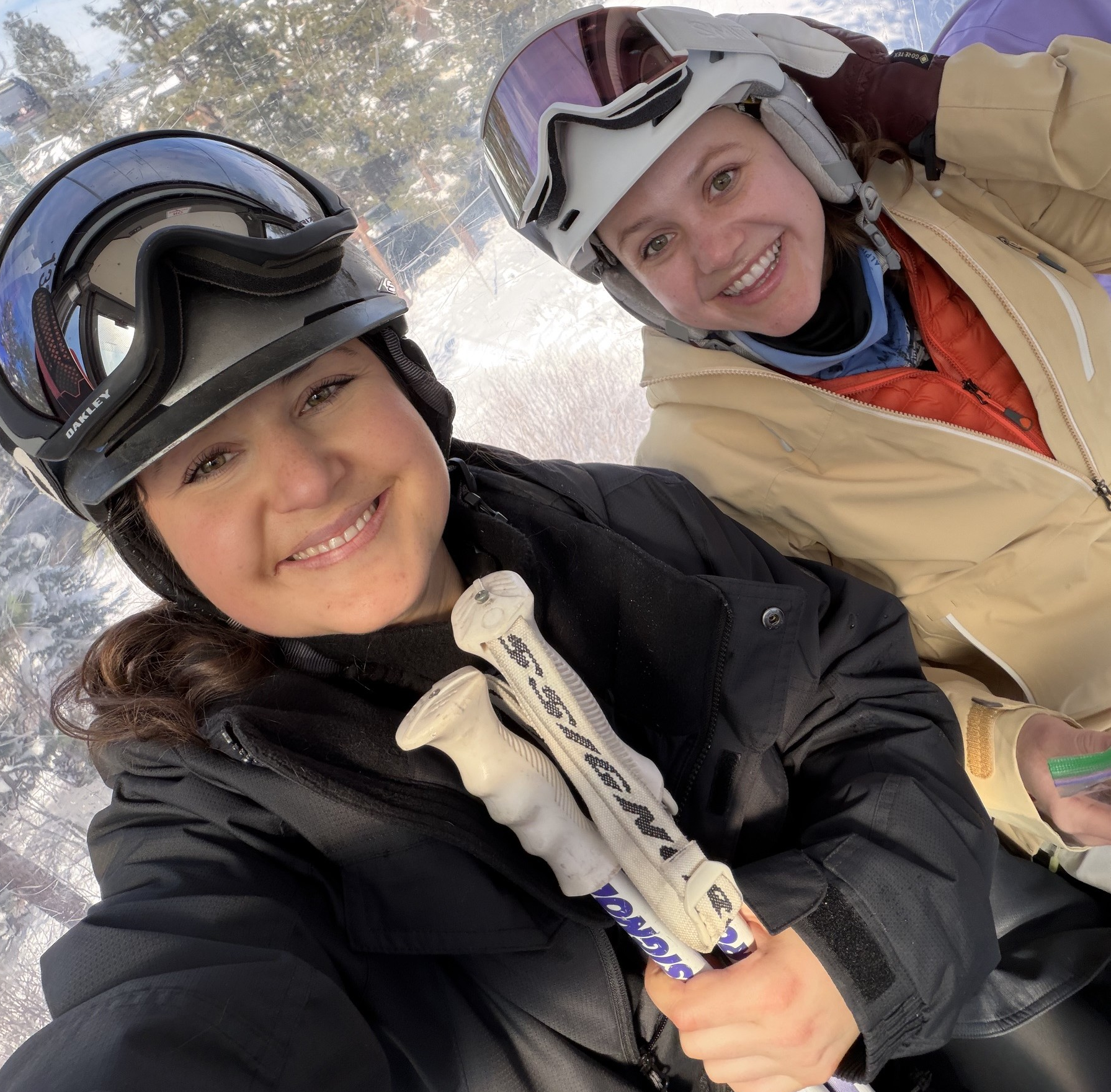 Maya skiing with a friend.
By Andrea Marvin, Public Information Officer

CPUC Attorney I Maya Benatar