
From Aerospace Engineering to Public Service: Meet Commissioner Christine Harada
Featured Story

What do you get when you mix a scrappy Los Angeles public school graduate with an aerospace engineer and an Obama and Biden White House appointee?
The California Public Utilities Commission’s (CPUC) newest Governor-appointed Commissioner, Christine Harada! Commissioner Harada is no stranger to taking on big challenges.
“I went to L.A. Unified and my high school was tough at the time with gangs, drive-by shootings, and caged soda machines,” Commissioner Harada says. “I was small and scrappy, and I learned early how to hold my own. But I also knew education was the way to a good life.”
She excelled on the student council, the marching band, and played the flute on the All-City High School Band in the Rose Parade. She grew up as a grandchild of Japanese immigrants who loved baseball, and she became a lifelong unwavering L.A. Dodgers fan. Finding resilience within a life of hard work and discrimination, her uncle played baseball in the strawberry fields after the work was done (his legacy is memorialized in an article on the Major League Baseball website). He eventually helped bring Japanese baseball players to this country. Those experiences of immigrant families, public schools, opportunity, and belonging, continue to inform how she thinks about public service today.
After high school, Commissioner Harada left L.A. for what she still considers her greatest accomplishment: moving far from home and graduating from MIT with a degree in aerospace engineering. She returned to California to pursue her master’s degree in aerospace engineering at Stanford University. She worked for Lockheed Martin on the team that designed and launched the Iridium satellite phone while also working on her PhD, and then decided to pursue her MBA instead.
She traded engineering problem sets for business school case studies, earning an MBA from the Wharton School and a master’s degree in international studies through the Lauder Institute at the University of Pennsylvania.
She and her husband settled back in California, and she started work as a consultant at Booz Allen, seeking out projects that leaned toward public service and improving government efficiency. During this time, she learned where her college education stopped and where real-world, on-the-job learning started, especially when it came to building coalitions, navigating conflict, and moving complicated issues forward.
“I realized how important it is to persuade naysayers and effectively work with people who may be frustrated or skeptical,” she says. “The most elegant solutions come from engaging with a diversity of policymakers and being able to counter set conclusions, build coalitions, and push things forward in a constructive way.”
That combination of engineering discipline, financial fluency, and coalition-building helped launch Commissioner Harada into a series of high-profile roles for the federal government, the White House, and California’s Government Operations Agency. She served as the Chief Sustainability Officer in the Obama Administration, Vice President for Government Affairs at Heliogen, and as a Biden Administration Presidential appointee overseeing a portfolio of nearly $100 billion in large-scale infrastructure projects. In that role, she worked to streamline permitting and fast-track hundreds of renewable energy, coastal restoration, and electricity transmission projects throughout the country, not an easy endeavor across local, state, and federal governments.
Now, Commissioner Harada, based in the CPUC’s Los Angeles office, is digging into her next big challenge, serving as a CPUC Commissioner during a time when California is hosting global events, finding ways to provide high-speed internet for all, continuing an upswing in renewable energy, and balancing electricity rates with wildfire mitigation.
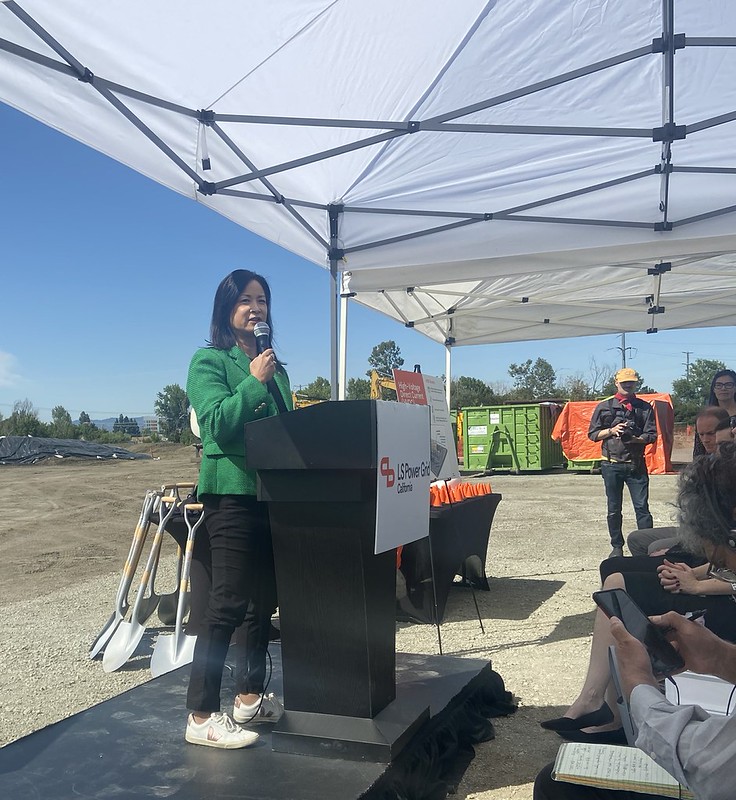
Commissioner Harada speaking at a ground-breaking event for LS Power Grid California's Power Santa Clara Valley in May 2026.
“I’m excited to serve as an L.A.-based Commissioner,” she says. “L.A. County has a trillion-dollar economy and is ranked 20th in the world in GDP. I look forward to influencing how we keep that going when it comes to transportation safety and infrastructure. That includes the global stage of the World Cup and the 2028 Olympics.”
Commissioner Harada also is prioritizing working with her fellow Commissioners, CPUC staff, and other state leaders to pay down California’s wildfire mitigation costs and increase energy affordability for all Californians. She and her family were evacuated during L.A.’s Eaton Fire and were lucky to return to their home. She says she directly feels the pain of neighbors who weren’t so lucky.
“That experience stays with you,” she says. “It makes it very clear that the work we do here affects people’s homes, their safety, their bills, and their ability to plan for the future.”
This coincides with the north star she’s followed throughout her leadership journey and the advice she has for future leaders: become the expert on a priority issue and build your network, including in your local community.
“It’s important to develop a specialty area of expertise in your career,” she says. “And then build your network, seek advice from others, come to the office, go get coffee together, stick your foot in the door, and do it in a way that plants seeds for the future and adds value.”
Day-to-day, Commissioner Harada follows advice she has for future leaders: “know thyself.” She is a morning person and prioritizes her most analytical work for earlier in the day. She uses the evening to plan the next day, including color-coding her calendar to ensure she is spending time on the most impactful issues as well as scheduling time for wellness.
“It’s the ‘boring’ stuff that matters,” she says. “Working out is key and I always find a gym near the office. I try to eat healthy, limit caffeine, and put a time limit on social media.”
But for Commissioner Harada, those habits are not just about personal productivity. They are about being ready to do the work with focus, stamina, and humility.
“The issues before the CPUC are complex, and they matter deeply to people’s daily lives,” she says. “My job is to listen, learn, ask hard questions, and help make decisions that are fair, practical, and grounded in the public interest.”
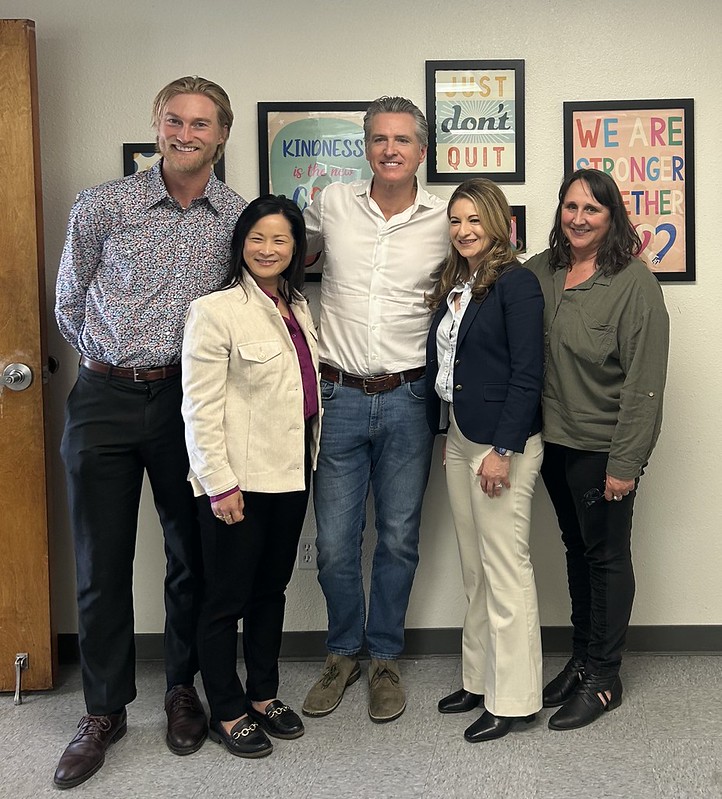
Commissioner Harada joined Governor Gavin Newsom, the California Department of Technology, and the Bishop Paiute Tribe to celebrate the tribe becoming the first customer of California’s Middle-Mile Network in April 2026. In photo (left to right): David Bath, CPUC Communications Division Analyst; Commissioner Harada; Governor Newsom; Ana Maria Johnson, CPUC Deputy Executive Director for Broadband and Communications; and Maria Kelly, CPUC Local Government and Community Liaison.
That sense of purpose is what connects the many chapters of Commissioner Harada’s career, from Los Angeles public schools to aerospace engineering, from the White House to the CPUC. At every step, she has been drawn to hard problems where technical expertise, public service, and lived experiences all come together.
And now, as California faces some of its most consequential infrastructure, affordability, safety, and climate challenges, Commissioner Harada is ready to hold her own once again.
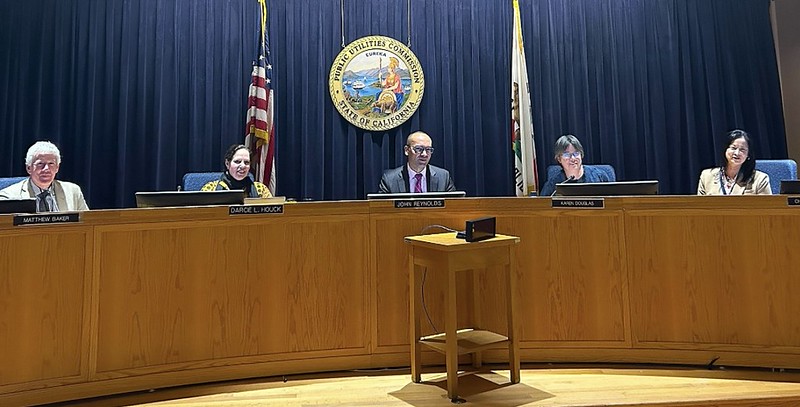
Commissioner Harada at a Voting Meeting in May 2026 in San Francisco with her fellow Commissioners.
By Jody Holzworth, Deputy Executive Director, External Affairs Division
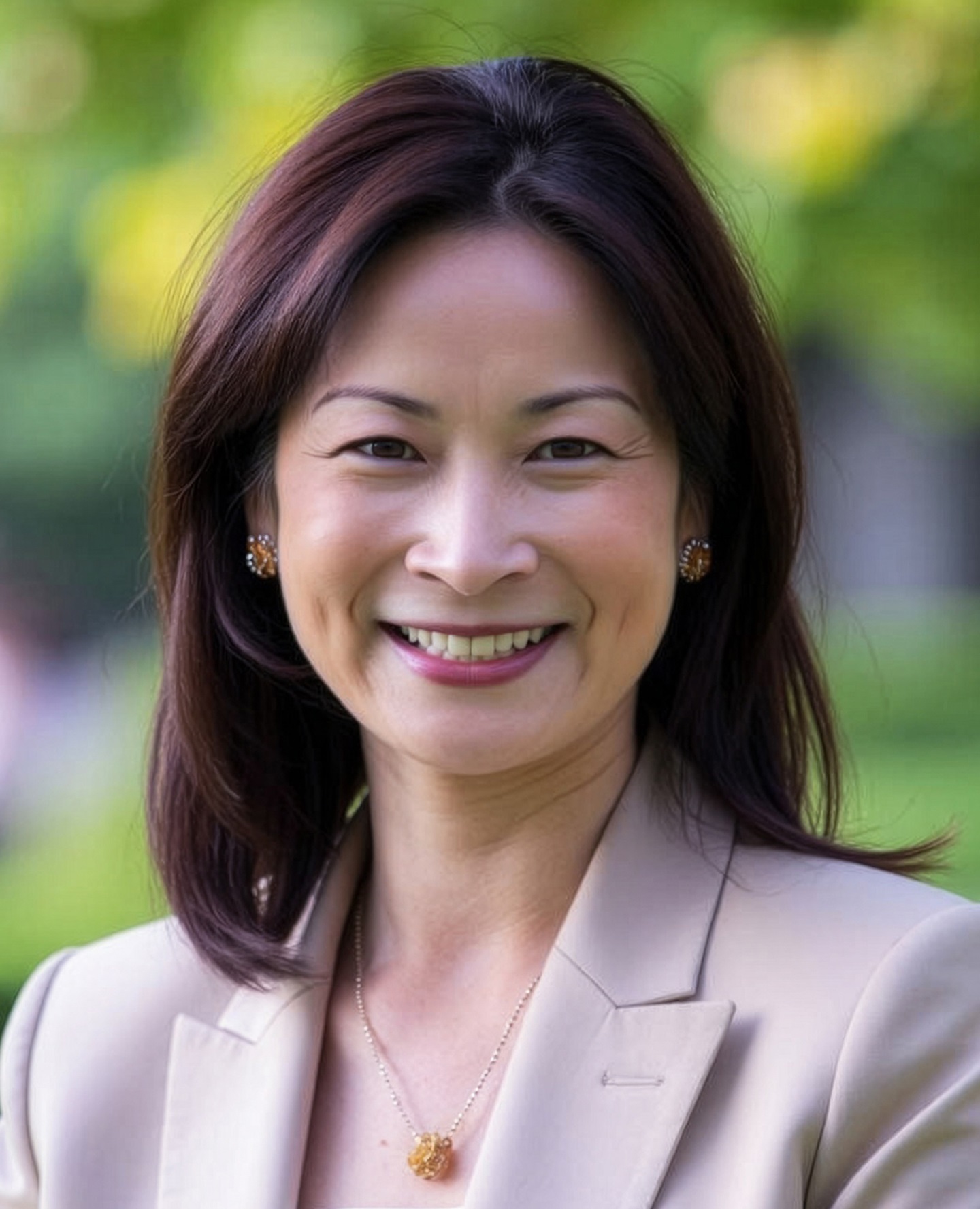
Christine Harada, the CPUC's newest Commissioner, based in the CPUC's Los Angeles office.