
How Parties Participate in and Inform the General Rate Case Process

As a public agency, the CPUC depends on input from stakeholders to make critical decisions impacting California customers. By hearing from different perspectives, the Commission is better able to make informed decisions that consider the impact of utility costs and services on all Californians. Third parties can help augment the CPUC’s analytical processes to deliver outcomes that are in the interest of Californians, from lower bills to cleaner energy portfolios.
This is especially important for the General Rate Case (GRC) process, which is the CPUC’s primary venue for scrutinizing energy and water utilities’ spending plans before they enter rates. GRCs must balance the goals of ensuring safe and reliable service, delivering on legislative mandates, and containing costs as much as possible – a difficult task which is heavily supported by party input.
GRCs are actively shaped by an open process with parties, sometimes referred to as “intervenors,” providing checks on utility requests throughout the proceeding. Many aspects of a GRC are contested by input and alternative proposals from parties. The Commission evaluates all party testimonies, including proposals for more cost-effective ways to meet system needs.
Individuals or groups can become official parties to a GRC proceeding by demonstrating their interest in the proceeding and showing how they would provide benefit. Parties to GRC proceedings can be any interested individual or group. GRCs frequently receive party input from customer advocates, commercial, agricultural, or industrial customer coalitions, and environmental or other interest groups, each providing a valuable perspective to the proceeding.
Formal Proceeding Steps
Throughout the proceeding process, there are many formal opportunities for parties to provide input that may impact the final decision. 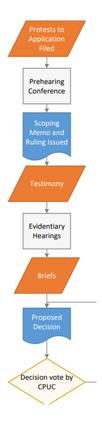
- Protests and Responses to Application & Pre-Hearing Conference: When the utility submits its GRC application, parties weigh in by submitting protests and comments in response to the initial application. They may also submit comments to inform the scope (or list of issues) that will be considered in the proceeding. A prehearing conference is held to discuss issues related to the scope and schedule of the proceeding.
- Testimony & Evidentiary Hearings: Once the scope of issues for the proceeding is set, a schedule for intervenor and rebuttal expert testimony and formal evidentiary hearings is established in a Scoping Memo and Ruling. During hearings, expert testimony is cross-examined . This oral testimony is transcribed by court reporters and is part of the record in the proceeding docket, which is cited to the parties in their opening and reply briefs. All of this information makes up the record of the proceeding, which is fully evaluated by staff, including the Administrative Law Judges that presider over the hearings and draft and finalize the Proposed Decision.
- Proposed Decision & Final Decision: After a Proposed Decision is issued, parties may submit comments, which must be taken under consideration and summarized in the Final Decision.
Other Opportunities for Party Input
GRCs also include additional, more informal opportunities for the Commission to gather information from parties. Such opportunities may include oral arguments, which allow parties to present verbal summaries of the case to the Commissioners directly. Parties may also participate in Ex Parte Communications, which are informal, verbal or written communications between interested parties and decision-makers, if they meet the requirements of the CPUC’s Rules of Practice and Procedure.
Intervenor Compensation
Intervenor Compensation ensures parties aren’t just helping inform outcomes for California customers but are also compensated for their time and input.
The CPUC’s Intervenor Compensation Program allows individuals and groups to have the financial resources to bring their concerns and interests to the Commission during formal proceedings.
How to Become a Party
The CPUC’s Rules of Practice and Procedure outline multiple ways that interested individuals and groups can file for party status in a proceeding. Methods include filing a response or protest to the application, making an oral motion at a prehearing conference or hearing, or filing a motion for party status (if the proceeding is already underway). The CPUC’s Public Advisor’s Office provides resources and templates for those interested in becoming parties.
By Liza Martin, Public Information Officer