Before the First Ride: How the CPUC Helps Prepare New Rail Projects for Public Service
Featured Story

When a new rail station or transit system opens, most of us only see the finished product: the trains, platforms, and stations ready to take us where we need to go.
But before the first passengers step aboard, years of planning, construction, testing, and safety reviews are required to ensure the ride is safe.
That is where the California Public Utilities Commission (CPUC) comes in. Through its Rail Transit Safety Branch, the CPUC provides safety oversight for rail transit systems across California. Our staff works with transit agencies on major projects to make sure safety requirements are met before a new system or major project begins carrying passengers.
Safety Starts Before Construction Is Finished
A new rail project does not simply get built and then receive a final safety check. Safety is prioritized throughout the project.
For major projects, the CPUC requires that the transit agency develop a Safety Certification Plan that explains how it will address and verify safety during design, construction, testing, and preparation for service. The plan is submitted to the CPUC for review and approval early in the project and is updated as the project moves forward.
“Throughout the process, CPUC rail safety staff review designs and other documents, attend safety meetings, observe testing, inspect equipment and system components, and raise safety concerns that need to be addressed,” said Matthew Ames, CPUC Rail Safety Division Director. “The transit agency is ultimately responsible for the safety of its system. The CPUC provides an additional layer of independent oversight to ensure the agency's safety plans and procedures are being followed.”
Getting Ready for Passengers
As construction wraps up, the focus turns to a simple but important question: Is the project ready to safely carry passengers?
The answer takes more than checking a box.
The transit agency must demonstrate to the CPUC that safety requirements have been met and any safety concerns have been addressed. This includes looking at everything from how the system was designed and built to how it performs during testing.
Before passenger service can begin, the transit agency submits a final Safety Certification Verification Report to CPUC staff. The report documents completed project safety measures and identifies any remaining items or steps underway to keep the system safe while the transit agency manages any remaining issues.
The report must be submitted at least 21 days before the planned start of service. CPUC staff reviews it and either provides provisional approval or identifies areas for further action. The project cannot begin passenger service until CPUC staff has provisionally approved the report.
What This Looks Like at LAX
Two major transportation projects at Los Angeles International Airport (LAX) offer insight into how new rail connections come together.
Metro's LAX/Metro Transit Center, which opened in June 2025, created a new connection between the C and K Lines, buses, and other transportation options. The nearly 500,000-square-foot station was built to make it easier for travelers to move between different types of transportation and will eventually connect directly with LAX's Automated People Mover.
Before the LAX/Metro Transit Center opened to the public in June 2025, Metro submitted its final safety documentation to the CPUC showing that the project had met its safety requirements. CPUC rail safety staff then visited the station with Metro and project staff to review the completed project in person. After reviewing the documentation and conducting the site visit, CPUC staff gave the project approval to open to passengers.
A few minor items still needed follow-up after the station opened, including actions identified during emergency exercises and drills. CPUC staff continued working with Metro to make sure those items were addressed. By June 2026, all remaining items had been completed, with CPUC staff verifying the corrective actions.
Today, the station connects Metro's C and K Lines and will eventually connect travelers directly to LAX's Automated People Mover. In September 2026, the LAX/Metro Transit Center was also named one of the World's Most Beautiful Stations for 2026 by Prix Versailles, an international architecture and design awards program.
LAX/Metro Transit Center Fly Through
Nearby, another major project is preparing to carry passengers.
The LAX Automated People Mover, known as SkyLink, is a 2.25-mile elevated system with six stations connecting airport terminals with parking, the Consolidated Rental Car Facility and the LAX/Metro Transit Center.
As the system gets closer to opening, testing and safety reviews are an important part of the work still underway. CPUC staff is reviewing safety documentation for the project, including vehicle records and checklists used to show that the system meets its design requirements.
The People Mover is also going through extensive testing before passengers’ step aboard. One project milestone requires the system to operate continuously for 30 days, 24 hours a day, at 98.5 percent availability. Los Angeles World Airports then plans an additional six weeks of testing without passengers before beginning public service.
For the CPUC, the focus throughout this process is safety oversight. Our staff reviews safety documents, observes selected tests, conducts inspections, and checks that applicable safety requirements have been met. CPUC staff will complete review and approval of the Safety Certification Verification report when safety critical items are addressed and within 21 days of submittal.
The CPUC does not design or build the People Mover, manage its construction schedule, or operate the system. Those responsibilities remain with the organizations responsible for the project. The CPUC's job is to provide independent safety oversight as the project prepares to carry passengers.
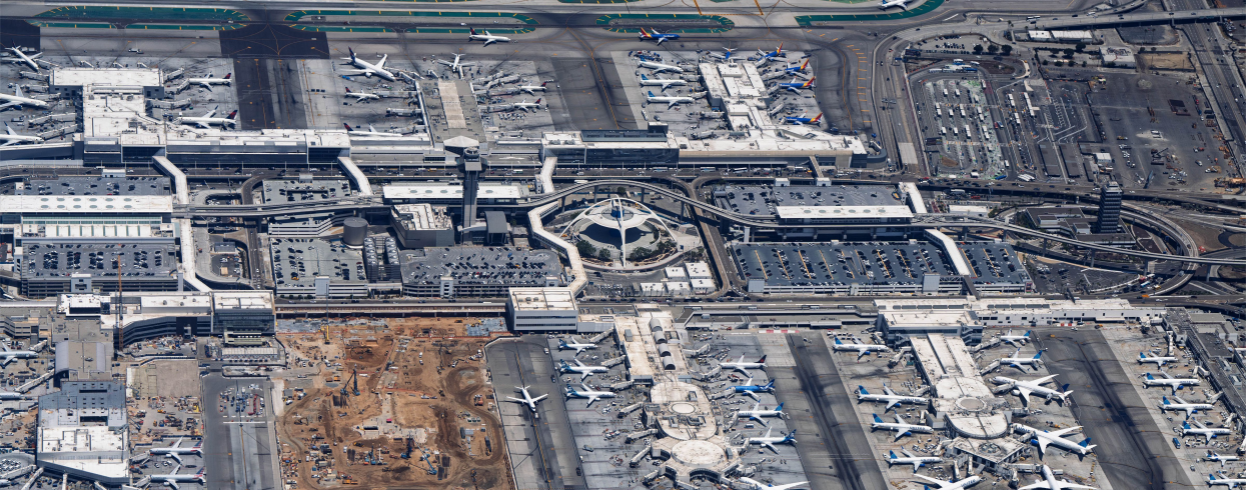
Aerial Photo of the Skylink
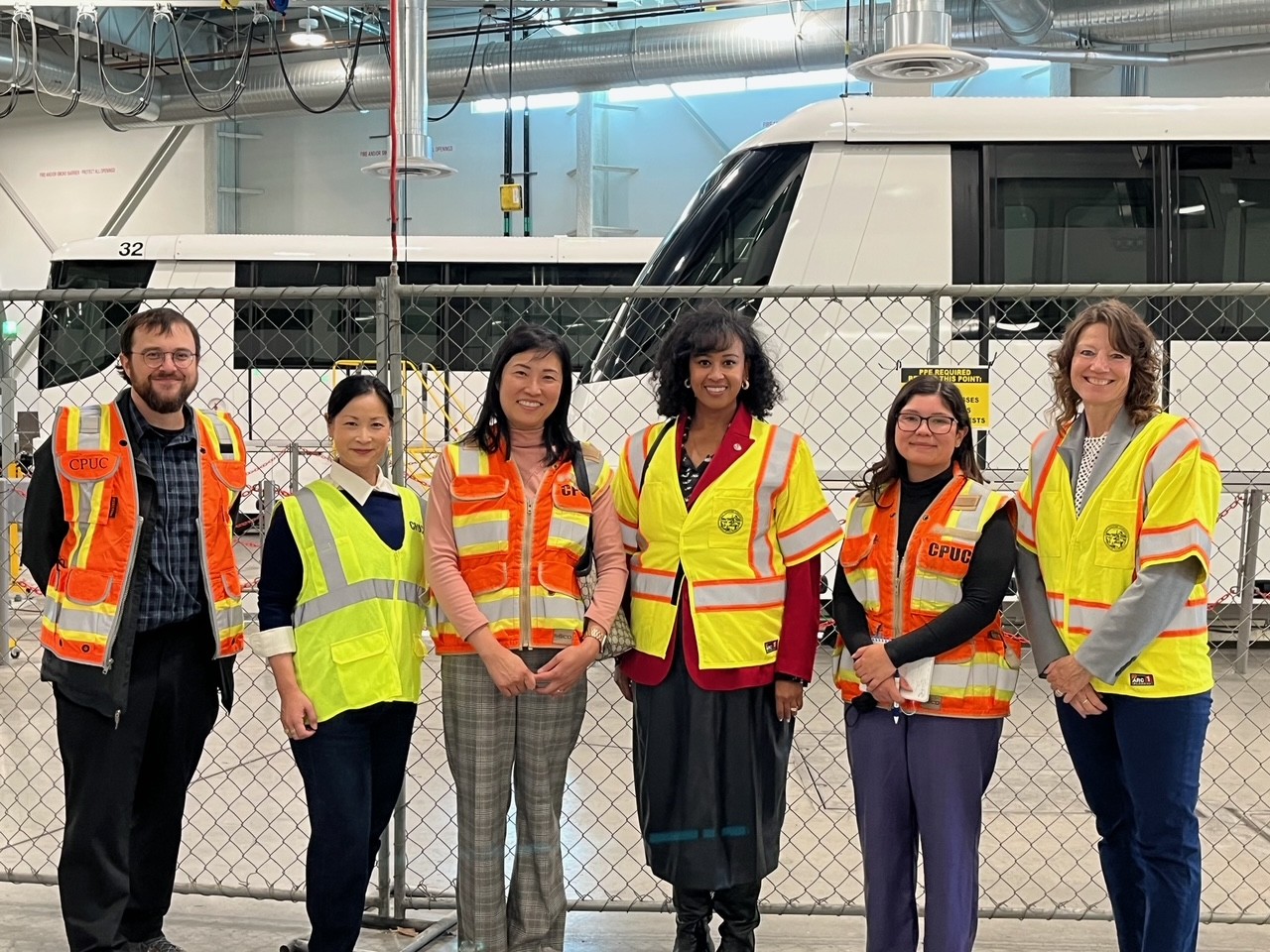
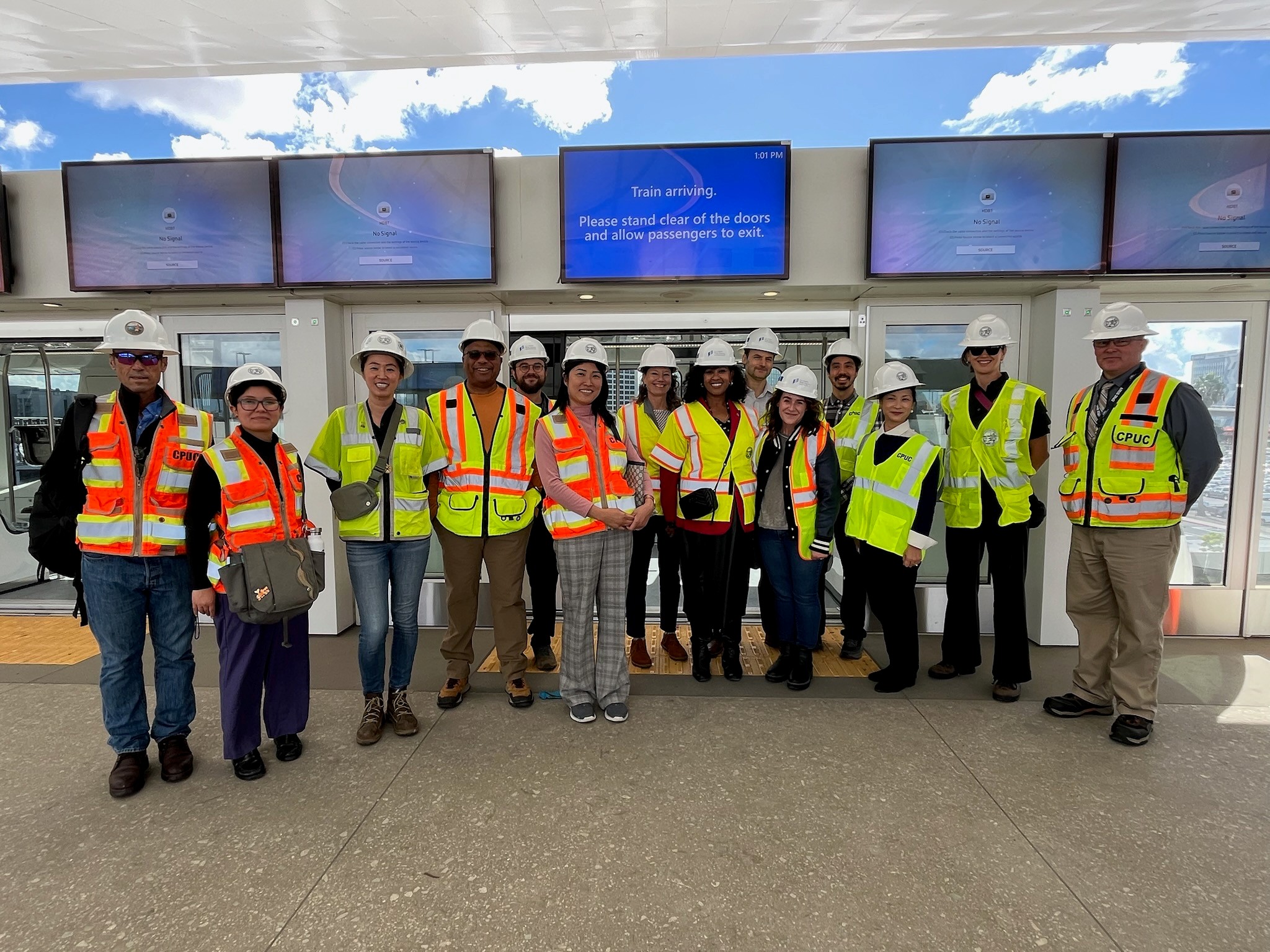
Skylink
A similar process is underway in Orange County, where the 4.15-mile OC Streetcar is preparing for passenger service.
As testing continues, CPUC rail safety staff are working directly with the OC Streetcar team to make sure safety requirements are addressed before the system opens. Staff have observed key tests along the route, including testing at gated crossings and selected tests of the streetcar vehicles.
CPUC staff have also participated in emergency preparedness exercises. In August 2026, staff observed an exercise involving a simulated pedestrian collision. In October, staff attended a larger emergency exercise that simulated a car entering the tracks and striking a streetcar.
Beyond testing in the field, CPUC staff meet weekly with the OC Streetcar team to review safety documents, discuss the project's progress and work through the safety certification process. This ongoing work helps CPUC verify that safety requirements are addressed as the streetcar gets closer to carrying its first passengers.