Modernizing Safety and Service - Advancing Utility Infrastructure in Mobile Home Park Communities
.png?mw=1440&hash=D4F3C34A1F24BEC4C6BBC4255840568C)
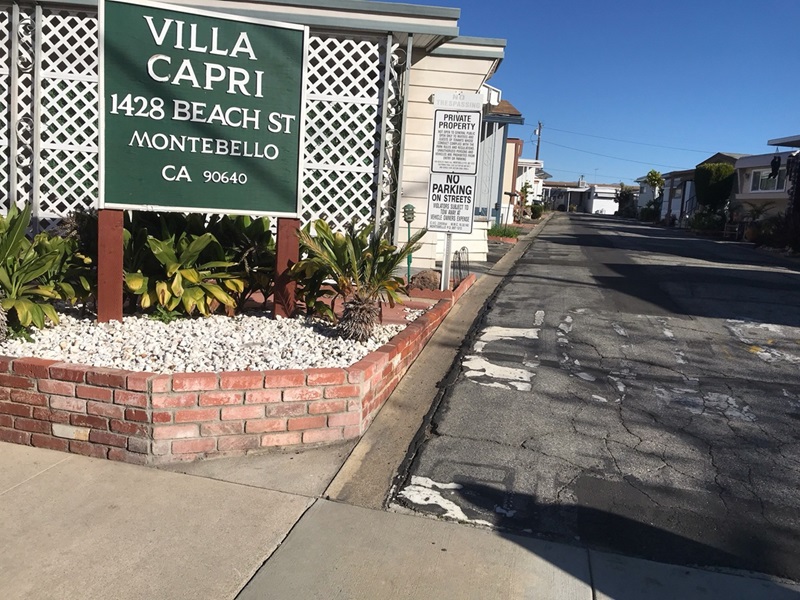
Photo of Villa Capri Mobile Home Park in Montebello, CA; a recent participant of the Mobilehome Park Utility Conversion Program.
Safe, reliable utility service is foundational to the health and wellbeing of communities across California. For decades, many mobile home park (MHP) residents relied on privately owned, master-metered gas and electric systems—aging infrastructure that was often difficult and costly for park owners to maintain.
To address these risks and expand access to modern utility services, the California Public Utilities Commission (CPUC) established the MobileHome Park Utility Upgrade Program (MHP-UUP), an initiative designed to replace outdated systems with new, professionally installed utility infrastructure owned, operated, and maintained by the investor-owned utilities (IOUs).
The program, originally launched as a pilot and formalized by the Commission in Decision 20-04-004, continues to make meaningful progress toward improving safety and resilience for California’s MHP residents with a goal of converting 50 percent of all mobile home spaces by the end of 2030.
Why the Program Matters
Mobile home parks often contain utility systems installed decades ago, with components that may degrade over time or fall out of alignment with current safety standards. These older systems can present elevated risks of failure—particularly for gas distribution—and may not support the electrical demands of modern life.
The MHP Utility Upgrade Program addresses these challenges by:
-
Replacing privately owned utility systems with new gas and/or electric distribution systems that meet today’s safety standards.
-
Transferring ownership and maintenance responsibilities to the local IOUs, ensuring ongoing professional oversight.
-
Reducing safety risks, including those associated with pipeline integrity and electrical distribution failures.
-
Improving reliability, particularly in communities historically underserved by infrastructure investments.
This work directly supports the CPUC’s mission to protect public safety and ensure equitable access to reliable utility service.
“The MHP Utility Conversion Program is bringing modern infrastructure into communities that a lot of people forget about. The residents now have the opportunity to install air-conditioning units, more efficient water heaters, and not worry about overloading the utility systems.” -Jason McMillan; Sr. Utilities Engineer Supervisor
How the Program Works
The CPUC uses a risk-based prioritization model to determine the order in which parks are considered for upgrades. Mobile home park owners submit a “Form of Intent” during designated application windows. These submissions provide system information that allows the CPUC’s Safety and Enforcement Division (SED) to evaluate each park’s risk level and develop a priority list for the utilities.
According to the SED Monthly Performance Report for October 2025, the Commission continues to manage applications and prioritization cycles consistent with D.20-04-004. For example:
-
During the first application period in 2021, SED received 986 Forms of Intent.
-
SED produced a priority list containing 1,557 parks representing approximately 171,000 home spaces.
-
A second application period took place from January 1 to March 31, 2025, resulting in 390 applications, with 332 parks confirming interest.
-
These new applicants were integrated into the model, producing the 2025 priority list of 1,525 parks, representing approximately 168,400 home spaces.
Once a park is selected, the utility installs new infrastructure "to the meter" (TTM), and in most cases, also upgrades the "beyond the meter" (BTM) facilities that directly serve individual homes.
Statewide Progress to Date
The program has delivered substantial infrastructure improvements statewide, reducing long-term safety risks and modernizing service for tens of thousands of Californians.
According to the October 2025 SED Monthly Performance Report:
-
Since the program began in 2015, utilities have installed new electric service to 44,673 spaces and new gas service to 51,643 spaces.
-
As of January 1, 2025, utilities have invested $1.57 billion in construction and program management.
In the most recent Annual Reports (filed February 2025), IOUs reported:
-
PG&E: 1,450 new gas spaces TTM, 1,430 BTM; 1,485 new electric spaces TTM and BTM.
-
SCE: 2,754 electric spaces TTM and 2,672 BTM.
-
SDG&E: 2,061 gas spaces TTM and 1,918 BTM; 1,685 electric spaces TTM and 1,641 BTM.
-
SoCalGas: 3,786 gas spaces TTM and 3,722 BTM.
-
Southwest Gas: 458 gas spaces TTM and 446 BTM.
These upgrades not only improve safety and reliability, but also provide residents with direct utility billing, support transparency and allows customers access to energy-saving programs, low-income assistance rates, and other utility customer benefits.
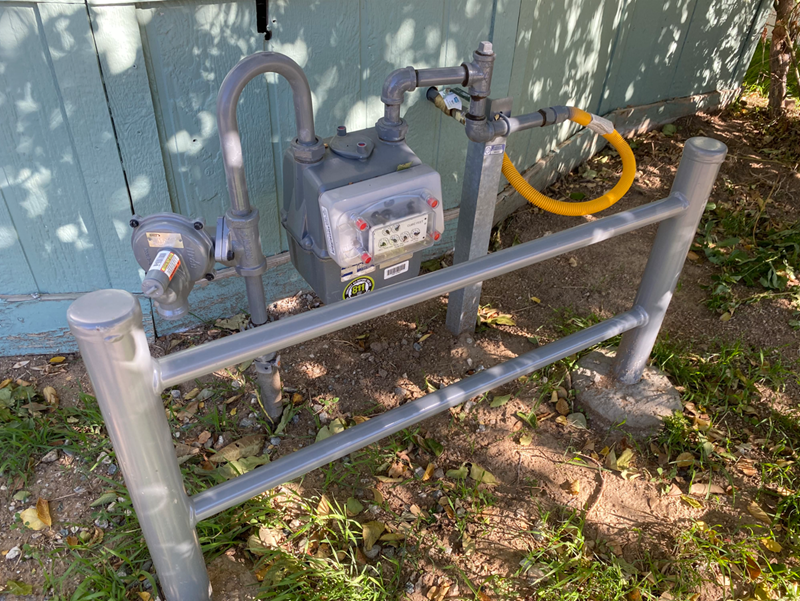
Photo of recently upgraded gas facility in Tehachapi, CA.
Supporting Vulnerable Communities
Many MHP residents are seniors, low-income families, or individuals with disabilities - groups that often face disproportionate risks from infrastructure failures and outages. By prioritizing the highest-risk parks and ensuring professional oversight of utility systems, the CPUC is delivering equitable safety improvements and enhancing resilience in communities that need it most.
The program also ensures that residents are not responsible for the cost of replacing these systems, thereby removing a significant financial burden for homeowners and park owners alike.
Oversight, Accountability, and Transparency
As part of its oversight responsibilities, the CPUC’s Safety and Enforcement Division:
-
Reviews annual MHP-UUP reports submitted by utilities.
-
Posts all priority lists and any approved re-prioritizations publicly.
-
Monitors safety complaints, including those involving mobile home park systems.
-
Tracks program costs, schedule, and implementation progress.
Looking Ahead
The MHP Utility Upgrade Program remains a critical component of California’s long-term strategy to strengthen safety, equity, and resilience across utility systems. With additional parks entering the program and utilities continuing construction work, thousands more residents will transition to modern infrastructure in the years ahead.
The CPUC will continue:
-
Applying its risk-based prioritization model.
-
Monitoring utility compliance and progress.
-
Ensuring transparency through public reporting.
-
Coordinating with utilities, park owners, and residents throughout the construction process.
This work underscores the Commission’s commitment to protecting public safety, modernizing infrastructure, and delivering equitable improvements for communities statewide.
By Adam Cranfill, Information Officer